Walk into any well-lit room and you probably notice the atmosphere before you notice the fixtures. That atmosphere is almost always the result of multiple light sources working at different heights and intensities — what lighting designers call layered lighting. Doing it without a designer is straightforward once the three layers are clear.
The three layers and what each does
Ambient lighting — the base layer
Ambient light fills the room. It prevents dark corners, makes the space navigable, and sets the general mood. Most rooms already have one: a ceiling fixture, a recessed downlight array, or a large pendant. The mistake is treating it as the only layer.
For ambient light, think in lumens rather than watts. A living room of roughly 20 m² needs somewhere between 1,500 and 3,000 lumens of ambient output depending on ceiling height and wall colours. Darker walls absorb more light and push you toward the higher end.
Task lighting — targeted and functional
Task lighting sits close to the work surface. Kitchen counters, reading chairs, bathroom mirrors, and home office desks all benefit from a dedicated source that points directly at the activity — not down from three metres away. A pendant above an island countertop, an adjustable arm lamp beside a chair, or a mirror-mounted strip above a vanity are all task layers.
The key metric here is illuminance: ideally 500–800 lux at the working surface for close visual work, and around 300 lux for casual reading. A decent 8–10 W LED spotlight at 500 mm distance will typically reach that range.
Accent lighting — shaping the room
Accent lighting draws attention to objects, textures, or architectural details. A picture light above a painting, a floor-grazing uplighter beside a bookcase, or LED strip light inside a glass cabinet — these do not add much to the overall lumen count, but they change how a room reads from across the space. Accent fixtures typically run at one-third to one-half the intensity of the ambient layer.
A simple rule of thumb: if you can switch off the ceiling light and the room is still usable because of table and floor lamps, you already have the beginning of a layered scheme.
Room-by-room notes
Living room
The living room is the most forgiving space to layer because it tolerates variety. A central pendant or flush mount provides ambient fill; a floor lamp behind a sofa creates a reading pool; a shelf light or picture light adds the accent. Dimmers on the ambient circuit make the difference between a bright working light and an evening wind-down atmosphere.
In Poland's northern latitudes, where winter afternoons are dark by 4 p.m., a living room that relies on a single overhead source becomes oppressive quickly. Spreading the load across four or five points of light — even at lower wattage each — produces a warmer, more even result.
Kitchen
Kitchens need the most considered approach because two very different activities happen there: food preparation (demanding, close visual work) and eating or socialising (relaxed, lower light levels preferred). Recessed downlights or a track system handle ambient; under-cabinet LED strips handle task; a pendant above the dining end handles both accent and secondary ambient.
The under-cabinet strip is often the single highest-value addition in a Polish kitchen renovation. A standard 90 cm run of 2,000 K LED strip at 12–14 W/m eliminates the shadow that falls on a counter when you stand in front of an overhead light.
Bedroom
Bedrooms benefit from keeping the ambient layer low and dimmable. A central fixture at full brightness is the wrong note in a room designed for sleep. Wall-mounted reading sconces on each side of the bed — independently switched — provide task light precisely where it is needed without disturbing a partner. A dimmable floor lamp in the corner covers the accent layer and doubles as a soft ambient source when the ceiling light is off.
Bathroom
Bathroom lighting is overwhelmingly dominated by the mirror. A single ceiling downlight creates harsh shadows across the face when applying makeup or shaving. The fix is lateral: two wall-mounted fixtures on either side of the mirror at roughly face height (around 150–160 cm from floor to centre), or a horizontal strip above the mirror that illuminates downward. The ceiling light then serves purely as ambient fill.
In Poland, bathroom fixtures must meet IP44 rating or higher within Zone 1 (directly above the bath or shower tray to 2.25 m height) and Zone 2 (60 cm horizontal from the bath edge). LED downlights rated IP44 are widely available from Polish electrical wholesalers.
Choosing switches and dimmers
Layering lights is half the work; controlling them is the other half. A three-gang wall plate that independently controls ambient, task, and accent circuits lets you dial the room to whatever activity is happening. If the budget allows for dimmers, the ambient circuit is the most useful place to start.
Not all LED bulbs dim smoothly. Before buying a dimmer, check the bulb manufacturer's compatibility list — most publish one. Trailing-edge (electronic) dimmers generally produce fewer flicker problems with LEDs than older leading-edge (TRIAC) types.
What layered lighting costs in practice
A modest living room retrofit in Poland — adding two table lamps, one floor lamp, and a picture light to a room that already has a ceiling fixture — runs to roughly 400–800 PLN in fixtures plus 30–50 PLN in bulbs, depending on whether you choose local brands or import. That is far less than replacing the ceiling fixture with a more expensive fitting that still only produces one layer.
The energy cost of running an additional 20 W of floor lamp for four hours per evening is approximately 0.08 kWh per day at current Polish electricity rates (around 0.70–0.80 PLN/kWh as of early 2026), or roughly 20 PLN per year. The atmospheric improvement is disproportionate to that number.
Starting without buying anything
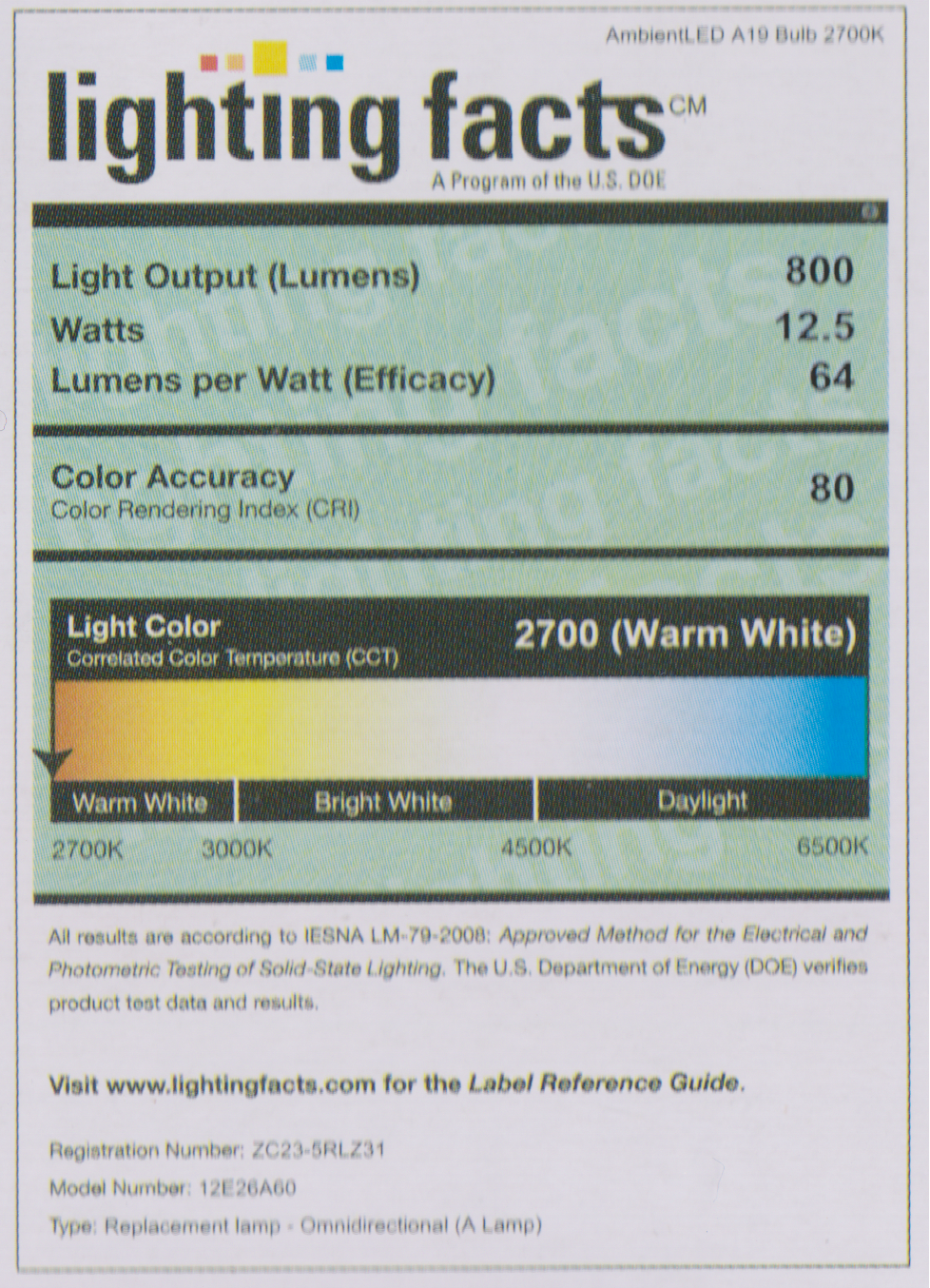
Before purchasing new fixtures, rearrange what you already have. Move a floor lamp from a corner to behind the sofa. Raise the table lamp to a surface that is lower than eye level when seated. Swap a cool-white bulb (5000–6500 K) in a table lamp for a warm-white one (2700 K). None of this costs anything, and it demonstrates whether the layering concept improves the room before any money changes hands.
Related: Choosing Colour Temperature for Home Lighting covers the Kelvin scale in detail — useful for selecting bulbs when building a layered scheme.